

Resources
Haters gonna Hate
With the internet came a vast amount of information to us – how to videos, social media, and the ability to google virtually anything (don’t get me started on “doctor google”). It has been a blessing and a curse to have access to so much information, as well as be able to share so much more about ourselves. While this access to information has informed us, it also seems to have empowered some people to criticize and shame others. Mom shaming is a great example of this.
When we are criticized it is a natural defense mechanism to try and defend ourselves by justifying our actions. While defense mechanisms are a whole other topic, when it comes to our outer circle of unrequested critics, try not to get caught up in engaging them. In the words of Dakota Meyers, “don’t take criticism from someone you wouldn’t take advice from.”
Game on
There is a lot of controversy surrounding video games. They are certainly a different breed than they were in the years of Atari or Nintendo 64. There are few adolescents I meet that aren’t playing video games and parents at times like to pick my brain regarding the impact on mental health.
I think this is a great article that doesn’t just focus on correlation studies (as so many do), but asks bigger questions, like why are video games so appealing? What needs are being met by this? How are these needs not being met in the real world?
Other questions to ask related to video gaming is the time allotment, time spent engaging in physical activity, themes of the game, why is it rated at that age/maturity level, and are they playing on line (a whole different beast of video gaming in my opinion). I always encourage parents to do their own research and read about the video games their child is begging them for, commonsensemedia.org is one of many great resources for this.
Balance of Well-Being

While these characterizations are a bit a silly, I really like how they have captured so many different “all stars” that contribute to our well-being. It is challenging to achieve all of these aspects of life, but it is possible, and our lives are healthier and happier because of them. Often this is not recognized until we experience the benefits of incorporating them into our lives regularly.
Creative outlet – This can range from coloring, doodling, journaling, playing an instrument – use your imagination! As we age out of the elementary school years it seems like people engage in this outlet less. Play is our first language. Our brains are intrinsically creative and crave these outlets. It can also be a great form of being mindful – a moment to forget the stress of social or work life.
Exercise – Carving out time for exercise poses as an obstacle, but the benefits are numerous – self-esteem, healthier lives, increased satisfaction with our body, engaging in routine, better sleep, etc. Start with a small goal – even if it’s just 30 minutes twice a week. Once you’ve maintained this achievement increase the goal to three times a week. It is expected that you will fall out of this routine time to time. What matters is that you get back on it! Eventually you’ll find that the frequency and duration of falling out of exercise grows shorter the longer you’re committed to it.
Routine – It is really healthy to have a general routine (but not too rigid of a routine). Part of a routine is cutting out time to balance all of these “all stars” aka self-care. Make it a routine to engage in creative outlets or social functions or time by yourself to recharge your batteries.
Sleep – What is there to be said about sleep that you don’t already know from your experiences of not getting enough? We feel it all day when we don’t get enough sleep. Research shows there’s no such thing as “catching up” on sleep – either you get enough in a night or you don’t. When it comes to healthy sleep habits they say no screens in bed or near bed time. Establish a routine around bed time that incorporates self-care. It’s a great way to make a little time to unwind each night.
Meditation – This can look differently for everyone – prayer, guided meditation, yoga, gardening.
Social activity- I’m a big believer in work-life balance and I think friends are a big part of this.
Healthy diet – Vitamins and a healthy dose of vegetables are important. Cut out what you can – soda, processed candy bars – but also enjoy life. If you like chocolate, eat it! Just eat it in moderation.
Love – Pets, family, friends – we were designed for relationships. Be vulnerable with important relationships in your life. Practice kindness, patience, and selflessness with others and it will come back to you 10 fold.
Sun/air – As our worlds become more and more digital we spend less time with fresh air and sunlight. A walk in the woods does more for your body than you can imagine. Read more about some of the benefits here.
Humor – My absolute favorite and rather self-explanatory. Laughing does so much for us both personally and in our relationships when we laugh with others. Laughter is so important they’ve even developed therapy known as laughter therapy.
Therapy – Therapy can be a great opportunity to slow down and focus on ourselves and the areas we would like to improve. In this go, go, go world it’s good to slow down and hear our thoughts out loud and have the perspective of a trained professional.
Rumination
We can be so hard on ourselves – our biggest critics, or our own worst enemies. Unfortunately, it is not uncommon to lie in bed and scrutinize our part in an exchange from earlier in the day – picking apart someone’s response to us and assigning it a meaning that is negative toward ourselves. We over analyze their response or nonverbal cues and turn these responses over and over in our head and make them something much bigger, uglier, or upsetting than it was. While likely, the person on the other end of this conversation is sleeping peacefully and never gave your comment a second thought, or attributed anything negative to it. Sound familiar? This is called rumination.
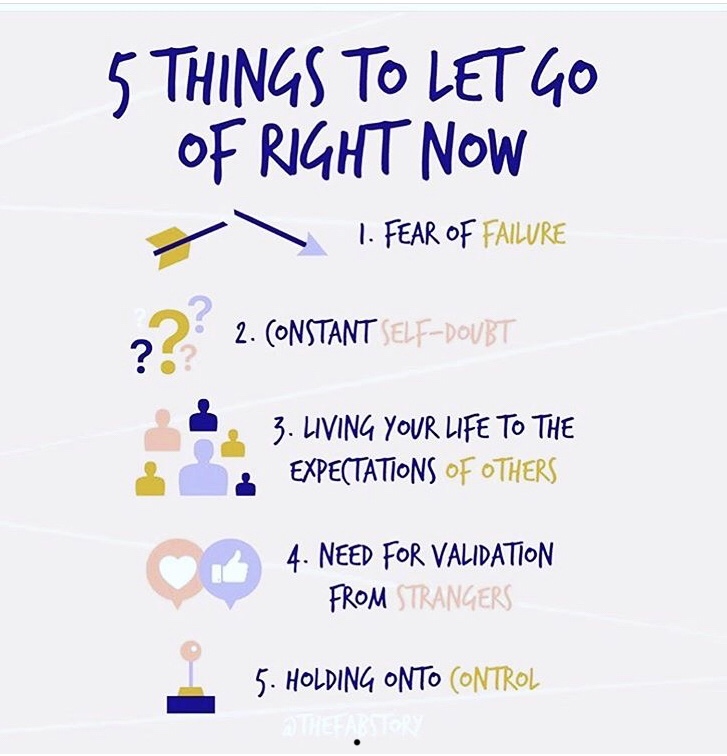
We need to be able to let go and focus on living in the present. It is very possible that the comment or event you’re turning over and over – no one remembers or interpreted your behavior in the way you are worried about. Sometimes, being in control of ourselves means letting these things go and not letting these thoughts or worries consume us. Guided imagery can at times be useful for this. An example: Imagining taking these thoughts and putting them in a box, taping that box up in duct tape, tying it to a balloon, and sending it off.
Sometimes, rightfully, we do find ourselves a little embarrassed or guilty about our response to a situation or something we said, which is appropriate, but holding on to these things and agonizing over this is not appropriate. If you really believe yourself to be in the wrong, talk to the other person about it and listen. If their response is something similar to, “oh no! I didn’t think that at all,” trust them! If they share they were upset/hurt, ask for forgiveness and make a mental note for future exchanges. But can we really accept forgiveness from someone if we can’t forgive ourselves? Holding on to hurt doesn’t help, but learning from it does. Likewise, when someone comes to us seeking forgiveness and we give it to them, that means letting go of it, not keeping a tally of their wrongdoings toward us, to throw back at them the next time they hurt us.
So often we fight to control how people perceive us. Sometimes that means appearing confident or being boisterous/outgoing, because if we put ourselves out there assertively, then we help control their narrative. For others, it may mean being quiet, mysterious, or guarded because it feels safer, as if people can’t judge or dismiss you if you don’t put yourself out there. Every so often how people perceive us isn’t even related to who we are or what we say/do, but rather a person from their past we remind them of. The more we love our own decisions, the less we need others to love them.
A strategy to combat rumination or negative self-talk is called reality testing. In short, when we have a negative thought or belief, ask yourself: What is the evidence for this belief? That is, evidence – facts and information beyond your own perception. Click here to read an article at GoodTherapy.org for more on the concept of reality testing.
 Oak Tree Therapy